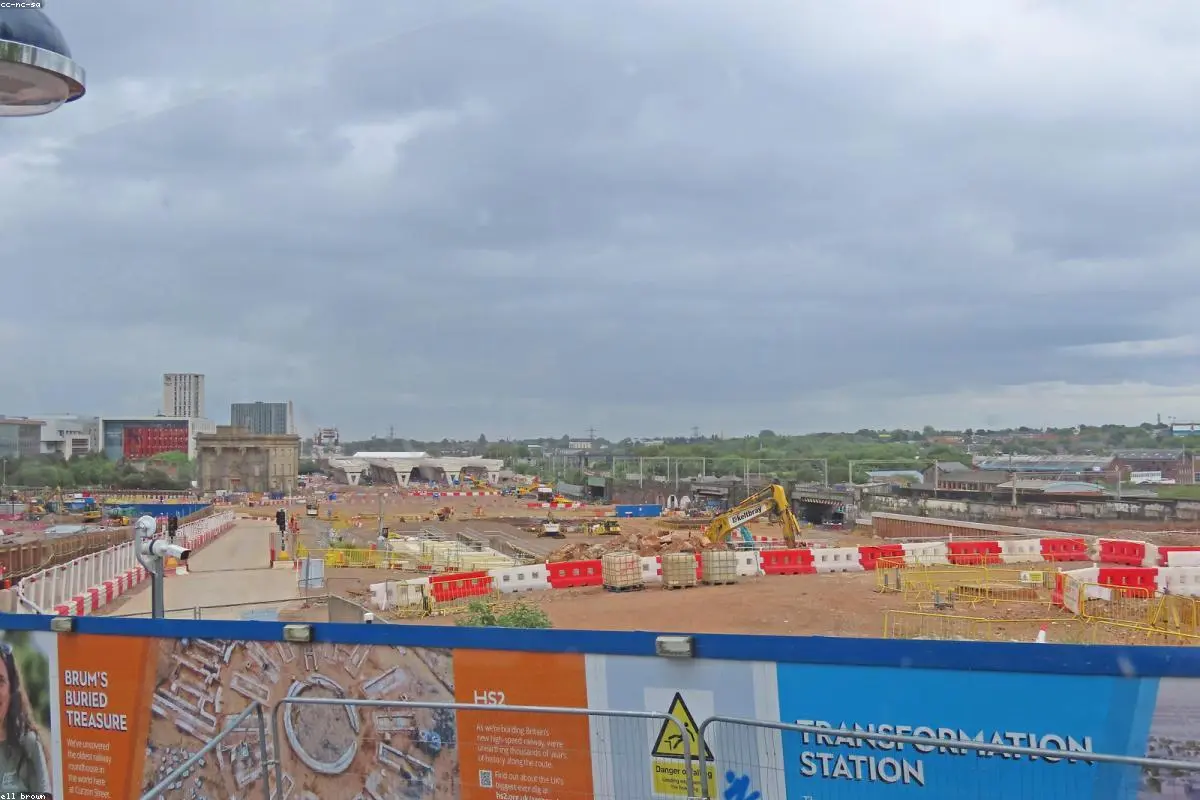
To look at the current state of High Speed 2 (HS2) is to witness a masterclass in British infrastructure angst. What was once billed as a transformative, nation-spanning engine of economic growth has been systematically chipped away, leaving behind a heavily truncated line that currently threatens to run merely from the suburbs of west London to the outskirts of Birmingham. To many critics, it has become a symbol of political short-termism and financial mismanagement.
Yet, beneath the surface of the recent political decisions and budget drama, a different narrative is quietly taking shape. As BBC Economics Editor Faisal Islam has pointed out, the obituary for a complete HS2 may have been written too soon. Despite the headlines screaming of cancellations and fiascos, the fundamental economic pressures that birthed the project in the first place have not gone away. In fact, they are growing more urgent by the day.
The Great British Capacity Crunch
To understand why the full HS2 line could still rise from the ashes, one must look past the debate over travel times. HS2 was never purely about shaving fifteen minutes off a journey to Manchester. At its core, the project was designed to solve a boring but critical problem: capacity on the West Coast Main Line, one of the busiest rail corridors in Europe.
By moving fast passenger services onto their own dedicated tracks, the existing lines would be freed up for local commuter trains and, crucially, freight. Without this extra breathing room, the UK's transport network faces a severe bottleneck that directly threatens long-term business and economic growth. As businesses look to decarbonize their supply chains by moving cargo from roads to rail, the lack of track space becomes an expensive roadblock.
The Euston Dilemma: A Hole in the Heart of London
Perhaps the most immediate catalyst for a rethink is the situation at London Euston. The previous government's plan to terminate the line temporarily at Old Oak Common in west London was widely mocked as a "train to nowhere" scenario. Forcing thousands of passengers to transfer onto the Elizabeth Line just to reach central London is a logistical nightmare that defeats the purpose of a premier high-speed network.
The reality is that Euston must be built, but the funding mechanism remains a battleground. The current strategy relies heavily on attracting private investment to redevelop the station and the surrounding area. If the private sector steps up, it changes the financial equation entirely. Once the massive sunk costs of tunneling into central London are resolved, the economic argument for extending the tracks northward becomes far more palatable to Treasury officials.
The High Cost of Doing Nothing
Furthermore, canceling major infrastructure projects is rarely as cheap as it looks. The government has already spent billions purchasing land, designing phases, and preparing sites. Leaving these sites as half-finished construction zones is not just an eyesore; it is a waste of capital that yields zero return on investment.
- Sunk Costs: Billions have already been spent on land acquisition and preparatory works for the northern legs.
- Contractual Penalties: Ripping up contracts and winding down major engineering consortia carries its own hefty price tag.
- Opportunity Cost: A congested transport network costs the UK economy billions in lost productivity every year.
A New Approach to Private Finance?
With public finances stretched to their limits, the future of British infrastructure likely hinges on a evolution of the funding model. There is a growing consensus among regional leaders, particularly in the North and the Midlands, that alternative financing methods could rescue the cancelled legs of the route. Mayor of Greater Manchester Andy Burnham and his counterpart in the West Midlands have active proposals to involve private consortia in building a midlands-to-north link.
This pragmatic, business-led approach could offer a politically palatable way out for the current administration. By partnering with pension funds and international infrastructure investors, the government could deliver the capacity the country desperately needs without directly loading the entire multi-billion-pound bill onto the taxpayer's shoulders. The original context of this shifting economic landscape is explored in depth by BBC News, illustrating how the debate is moving from political posturing to hard financial realities.
The Verdict: A Project Too Big to Fail?
Ultimately, the story of HS2 is far from over. It may not be called HS2 when it is finally completed; it may be rebranded, delivered in smaller phases, or heavily backed by private consortiums. But the physical reality of the UK's transport crisis means that some version of a high-speed, high-capacity north-south railway remains an inevitability.
In politics, as in economics, today’s cancelled project has a habit of becoming tomorrow’s urgent priority. As congestion mounts and the economic divide between the north and south of England widens, the pressure to complete the job will only grow. The HS2 fiasco may have delayed the future of British rail, but it has not derailed it entirely.


