Only a few short months ago, Charles Leclerc was the toast of the Mediterranean. His emotional victory at the Monaco Grand Prix felt like a definitive turning point—a moment where the 'Prince' finally claimed his crown and Ferrari established themselves as the primary challengers to the Red Bull dynasty. Fast forward to the mid-season stretch, and the atmosphere in Maranello has shifted from celebratory to soul-searching.
While Leclerc has grappled with a car that seems to have lost its way, a familiar figure has surged back into the spotlight. Lewis Hamilton’s recent victory at Silverstone and his renewed consistency with Mercedes have provided one of the season’s most compelling narratives. However, it also invites a pointed question that is currently echoing through the paddock: Are Leclerc’s recent struggles directly linked to the psychological pressure of Hamilton’s revival?
The Technical Turmoil at Maranello
Before we attribute Leclerc’s dip in form entirely to the 'Hamilton factor,' it is essential to look at the machinery beneath him. Formula 1 is, first and foremost, an engineering competition. Ferrari introduced a significant floor upgrade in Spain designed to unlock more downforce, but it came with a devastating side effect: the return of high-speed bouncing, or 'porpoising.'
For a driver like Leclerc, who relies on absolute confidence in the car's entry stability to execute his trademark aggressive style, a vibrating floor is a nightmare. This technical regression forced Ferrari to revert to older specifications, leaving them in a developmental limbo while McLaren and Mercedes surged forward. It’s hard to look like a world-beater when your car is actively fighting against you at 200mph. You can find more detailed analysis on team dynamics and technical shifts in our Sports section.
The Shadow of 2025
However, the human element in F1 can never be ignored. In 2025, Lewis Hamilton will swap his Mercedes silver for Ferrari red, becoming Leclerc’s teammate in what is arguably the most anticipated pairing in modern racing history. For the past few years, Leclerc has been the undisputed golden boy of Ferrari—the 'Chosen One' to end the Scuderia’s title drought.
Hamilton’s resurgence changes the temperature in the room. When the deal was first announced, Hamilton was enduring a lean spell, leading some to wonder if Ferrari was buying a legend in his twilight years. His win at the British Grand Prix silenced that talk. It served as a vivid reminder that Hamilton hasn't lost a step. For Leclerc, seeing his future teammate thrive while he struggles to make Q3 isn't just a frustration; it’s a challenge to his status as the team leader.
Correlation or Causation?
According to the recent F1 Q&A perspectives shared by BBC Sport, the debate isn't necessarily about Leclerc losing his talent, but rather the compounding pressure of external factors. It is a classic case of 'double-jeopardy.' Leclerc isn't just fighting a temperamental car; he's fighting the narrative that the king is coming to reclaim his throne.
We've seen this before in racing. When a high-profile teammate is signed, the incumbent driver often feels the need to 'over-drive' to prove their worth. This can lead to the unforced errors we’ve seen from Leclerc recently—the gambles on tire strategy that don't pay off, and the aggressive lines that result in lost time. When you try to find the extra tenth of a second that the car simply doesn't have, you usually end up in the gravel or the barrier.
The Sainz Factor
To complicate matters further, Carlos Sainz is not going quietly into the night. Knowing he is the one being displaced by Hamilton, Sainz has been driving with a 'nothing to lose' attitude that has frequently seen him outshine Leclerc in recent weekends. This creates a pincer movement on Leclerc’s confidence: on one side, a future teammate who is winning again, and on the other, a current teammate who is arguably more comfortable with the car’s current limitations.
Leclerc is a driver who wears his heart on his sleeve. His radio communications often reveal a man who is deeply self-critical. While this honesty is part of his charm, it can also be a weakness in a psychological war of attrition. Hamilton, conversely, is a master of the mental game, seasoned by decades of title battles against the likes of Alonso, Rosberg, and Vettel.
Looking Ahead: The Path to Recovery
The summer break can’t come soon enough for the Scuderia. For Leclerc to bounce back, Ferrari needs to provide him with a stable platform that doesn't require heroic, high-risk maneuvers just to stay in the points. If the car returns to the sweet spot it occupied during the early rounds, Leclerc’s natural speed will undoubtedly return.
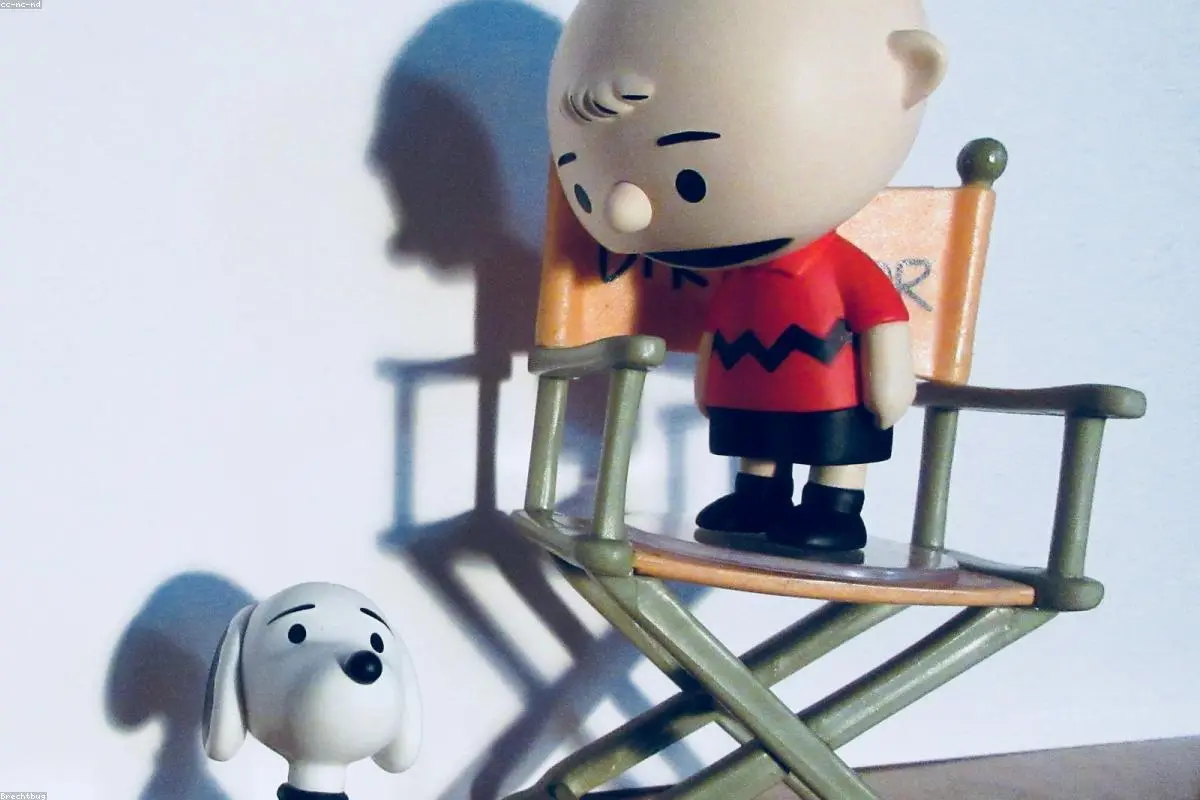
But the psychological shadow cast by Hamilton won't disappear. If anything, it will grow longer as the 2025 season approaches. Leclerc’s task is to prove that he isn't just a fast driver, but a resilient one. He needs to show that he can handle the arrival of a seven-time champion without losing his own identity on the track. The battle for supremacy at Ferrari hasn't even officially begun, yet it’s already the most fascinating story on the grid.