Tesla Streamlines Car Lineup to Accelerate AI and Robotics-Driven Manufacturing Future
In a strategic move poised to reshape the future of automotive production, Tesla has announced a significant reduction in its car model offerings. This pivotal decision underscores the electric vehicle pioneer's accelerating shift towards a manufacturing ecosystem heavily reliant on advanced artificial intelligence (AI) and robotics. The aim is clear: to achieve unprecedented levels of efficiency, scalability, and innovation in the production of electric vehicles.
This development, reported by sources including the BBC, marks a critical inflection point for the company known for its disruptive approach. By narrowing its product focus, Tesla intends to dedicate greater resources and engineering prowess to perfecting its 'unboxed' manufacturing process, a system designed from the ground up for automation, run by sophisticated AI algorithms and industrial robots. (Source: BBC News)
Tesla's Strategic Pivot Towards Hyper-Automation
Elon Musk, CEO of Tesla, has consistently championed a vision where the factory itself is a product – a complex machine optimized by cutting-edge technology. The decision to prune the model lineup directly supports this "alien dreadnought" factory concept. Simplifying the product portfolio allows for greater standardization of components, streamlined supply chains, and more robust, rapidly deployable automated production lines. This focus enables Tesla to concentrate production on its highest-volume and most strategically important vehicles, enhancing manufacturing processes, reducing complexity, and driving down per-unit costs – crucial for achieving mass market adoption.
The Core of Innovation: AI and Advanced Robotics
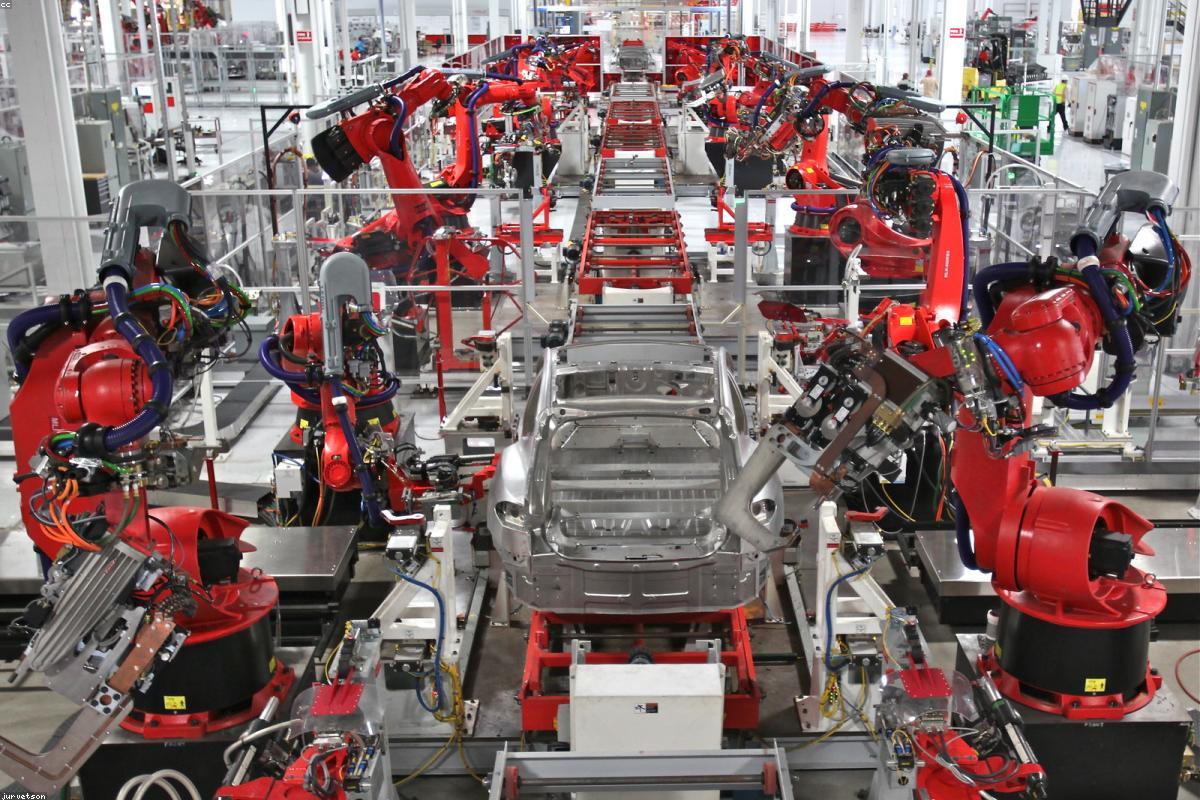
At the heart of Tesla's strategy lies a profound commitment to AI and robotics, serving as foundational pillars for future growth. In Tesla's vision, AI will oversee entire production sequences, predict maintenance needs, optimize energy consumption, and manage complex logistics with minimal human intervention. Robotics will handle precision assembly, welding, painting, and inspection, often integrating with sophisticated AI-powered vision systems.
This integration extends beyond simple automation. Tesla is developing intelligent robots capable of learning and adapting, leveraging data from ongoing production to continuously improve efficiency and quality. This iterative feedback loop is central to Tesla's innovation philosophy, allowing for rapid deployment of improvements across its global network of gigafactories. The goal is highly flexible, efficient manufacturing cells that can quickly adapt to design changes and scale production with unprecedented speed.
Beyond Factory Floors: Tesla's Integrated AI Ecosystem
Tesla's reliance on AI extends far beyond manufacturing. The company's pioneering work in autonomous vehicles and its Full Self-Driving (FSD) software suite showcases its AI prowess. Data from millions of Tesla vehicles provides invaluable feedback, not only for improving FSD but also for refining the underlying AI architectures that could eventually govern factory operations. This synergy between vehicle AI and factory AI creates a powerful, integrated technological ecosystem, pushing boundaries in product design and manufacturing.
Significant investments in supercomputing infrastructure, like the Dojo AI training supercomputer, further underscore this commitment to AI dominance. Such infrastructure is vital for processing vast datasets and developing the complex neural networks required for both advanced driver-assistance systems and next-generation intelligent manufacturing robots.
Market Implications and Future Outlook
Tesla's bold pivot could have profound implications for the entire automotive industry. Competitors, often grappling with traditional manufacturing complexities, will likely watch closely as Tesla perfects its AI- and robotics-driven production model. If successful, this strategy could set a new benchmark for efficiency, speed, and cost-effectiveness in vehicle manufacturing, potentially compelling other automakers to accelerate their own automation efforts.
However, this transition presents challenges, including substantial initial capital investment in advanced robotics and AI infrastructure. Concerns around workforce displacement and the demand for highly skilled technicians to manage these sophisticated systems will also need careful consideration. Despite these hurdles, Tesla's history of disruptive innovation suggests it is prepared for a long-term play, betting on the transformative power of technology to maintain its competitive edge.
Conclusion: A Glimpse into Manufacturing's Future
Tesla's decision to streamline its car models in favor of intensified investment in AI and robotics represents more than a product strategy adjustment; it's a bold declaration of its vision for the future of manufacturing. By embracing hyper-automation and intelligent systems, the company aims to not only produce electric vehicles more efficiently but also to redefine the very essence of a modern factory.
This strategic pivot underscores a profound belief in the power of cutting-edge technology to unlock unparalleled production capabilities. As Tesla continues its journey, the automotive world and broader technology sector will be watching intently, eager to see how this ambitious blueprint for an AI- and robotics-driven future unfolds.