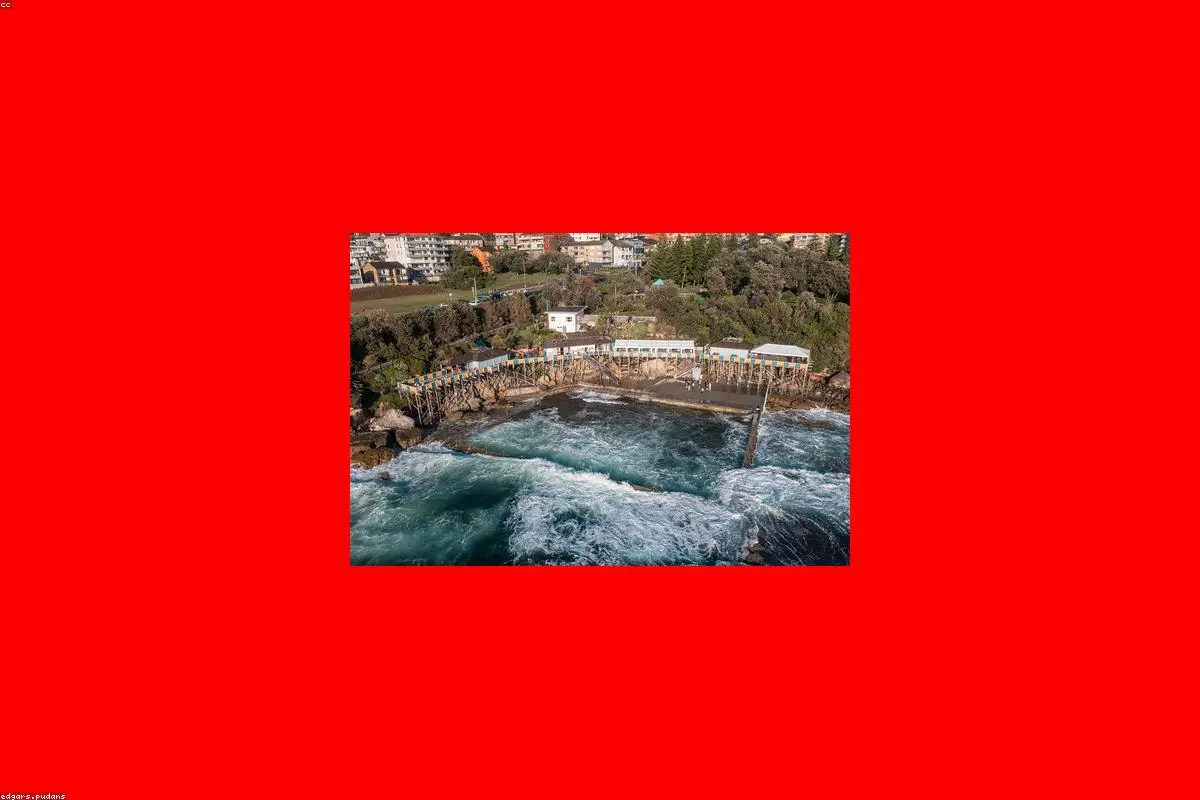
An Unforeseen Arrival on Coogee Beach
It was supposed to be a standard spring afternoon for beachgoers at Sydney’s iconic Coogee Beach. Instead, the shoreline was transformed into the site of an environmental mystery that has captured the attention of the world. Thousands of dark, spherical objects—roughly the size of golf balls—began rolling in with the tide, prompting an immediate response from local authorities and sparking a wave of speculation across social media.
The discovery led to the swift closure of Coogee, followed by nearby Gordons Bay and several other stretches of sand along the New South Wales coast. Lifeguards and council workers, equipped with gloves and collection bags, spent hours patrolling the water's edge, gathering the mysterious 'space balls' for laboratory analysis. The sight of the blackened shoreline stood in stark contrast to the pristine white sands that usually draw thousands of tourists to the area.
Initial reactions from the public ranged from the curious to the concerned. Some onlookers wondered if the objects were of extra-terrestrial origin, while others feared a major offshore industrial accident. The physical appearance of the balls—dark, somewhat squishy, and uniform in size—didn't immediately match standard debris usually found after a storm, leading to a heightened sense of urgency for the investigating teams.
The Scientific Investigation Begins
Randwick City Council, which oversees the affected beaches, was quick to issue a warning to the public: do not touch the objects. While the term 'space balls' has been used colloquially by some onlookers, environmental scientists are leaning toward a more grounded, albeit still troubling, explanation. Preliminary assessments suggest the spheres may be 'tar balls,' formed when oil comes into contact with debris and water, often the result of oil spills or seepage.
However, the uniformity and sheer volume of these objects have left experts scratching their heads. Typically, tar balls are irregular and sticky; these spheres seem uniquely weathered. Samples have been sent to the Environment Protection Authority (EPA) for rigorous testing. Scientists are looking for chemical signatures that could link the material to specific shipping fuels or industrial processes. Until those results return, the mystery remains officially unsolved.
This incident has highlighted the vulnerability of coastal ecosystems. Even if the objects prove to be non-toxic, their presence disrupts the local habitat and the tourism economy. In an era where ocean health is a top priority for the International community, events like these serve as a jarring reminder of how little we sometimes know about what is floating just beyond our horizon.
Connecting the Dots: A Global Perspective
The occurrence of mystery objects washing up on shores is not a phenomenon unique to Australia. From historical accounts of 'ambergris' (valuable whale vomit) to modern-day containers of Lego sets falling off cargo ships, the ocean has a way of returning our secrets to us. However, the 'space ball' mystery in Sydney feels different because of the potential for environmental contamination.
According to a report by the BBC, the sheer scale of the cleanup effort required to clear the beaches was significant. This isn't just a local cleanup; it’s an investigative puzzle. If these are indeed tar balls, the next question is: where did they come from? There were no immediate reports of oil spills from tankers in the region, which suggests the source could be an older, sunken vessel or a distant leak carried by powerful ocean currents.
Understanding these currents is a key part of the International effort to track marine pollution. What happens on a beach in Sydney can often be traced back to events occurring hundreds of miles away in the open ocean. As the investigation continues, authorities are monitoring satellite imagery to see if any slicks or debris fields are visible from above.
The Community Response and Environmental Impact
For the residents of Sydney, the beach is more than just a place to swim; it is a way of life. The sight of yellow 'Caution' tape across the entrances to the sand was a blow to the local community. Local business owners, who rely on the foot traffic of surfers and sunbathers, expressed hope that the mystery would be solved quickly and that the 'black tide' wouldn't become a recurring issue.
Environmental advocates have pointed out that even if the balls are eventually identified as relatively inert, the incident exposes gaps in how we monitor coastal waters. If thousands of golf-ball-sized objects can wash up unnoticed until they hit the sand, it raises questions about our ability to detect more hazardous spills before they reach the shore. The call for better offshore monitoring and stricter maritime regulations is growing louder.
As of the latest updates, most of the beaches have begun the process of reopening after intensive cleaning, but the 'all-clear' is being issued with a side of caution. Beachgoers are still being advised to keep a distance from any stray spheres they might spot. The lab results, expected in the coming days, will hopefully provide the closure the community needs—confirming whether these were indeed a byproduct of human industry or a more exotic maritime anomaly.
While the 'alien' theories might provide for entertaining dinner conversation, the reality is likely a sobering lesson in environmental stewardship. Whether the spheres originated from a ship, a spill, or a submerged wreck, their arrival on Coogee Beach is a clear message that the ocean is a shared resource that requires our constant vigilance and protection.