A Desperate Descent into the Unknown
History often forgets the quiet victories that occur in the shadow of grand geopolitical maneuvers. Long before the modern era of drone strikes and satellite surveillance, the survival of a single American service member depended on grit, primitive radio signals, and the sheer bravery of those willing to fly into the unknown. The story of David Sitton, a US airman who found himself stranded in the remote Zagros Mountains of Iran, serves as a gripping reminder of the risks inherent in international military operations during the height of the Cold War.
It was November 1959. Sitton was piloting a single-engine L-20 Beaver, a rugged aircraft designed for utility, but no match for the violent turbulence and blinding snowstorms that frequently whip through the high altitudes of western Iran. When the engine failed, the silence in the cockpit was immediate and terrifying. Sitton was forced to bring the aircraft down on a jagged, snow-covered slope, thousands of feet above sea level, miles from the nearest semblance of civilization.
As detailed in a recent retrospective by the BBC (Source: BBC News), the crash wasn't the end of Sitton’s ordeal—it was merely the beginning of a desperate struggle against the elements. Wrapped in a flight suit that offered little protection against sub-zero temperatures, he faced a choice: stay with the wreckage and hope for a miracle, or succumb to the mountain.
The Logistics of a Cold War Miracle
In the late 1950s, the relationship between Washington and Tehran was vastly different than it is today. Under the rule of the Shah, Iran was a key regional ally, yet the geography of the country remained as formidable as ever. When word of Sitton’s disappearance reached the US Air Force base in neighboring Turkey, the 58th Air Rescue Squadron was mobilized. However, locating a white aircraft in a sea of white peaks was like searching for a needle in a frozen haystack.
The rescue mission required more than just technical skill; it required a degree of intuition and luck. Rescuers eventually picked up a faint distress signal. While today’s GPS can pinpoint a location within centimeters, the search crews of 1959 had to rely on triangulation and the naked eye. The rescue efforts were further complicated by the extreme altitude. Early helicopters were notoriously difficult to fly in thin air, often lacking the lift necessary to hover or land on steep, uneven terrain.
Key Challenges Faced During the Rescue:
- Extreme Altitude: The thin air at 10,000 feet tested the structural limits of early rotary-wing aircraft.
- Volatile Weather: Frequent storms created "whiteout" conditions, grounding search planes for hours at a time.
- Communication Gaps: Spotty radio contact meant the rescue team was often flying blind.
- Isolation: The remote location meant that any mechanical failure on the part of the rescuers would result in two downed crews instead of one.
Despite these hurdles, a breakthrough occurred when a search pilot spotted a flash of light—Sitton using a small signal mirror. The sight of that tiny glimmer on a massive, desolate mountain sparked a complex extraction plan that would push the limits of what was then considered possible in aviation history.
The Final Extraction
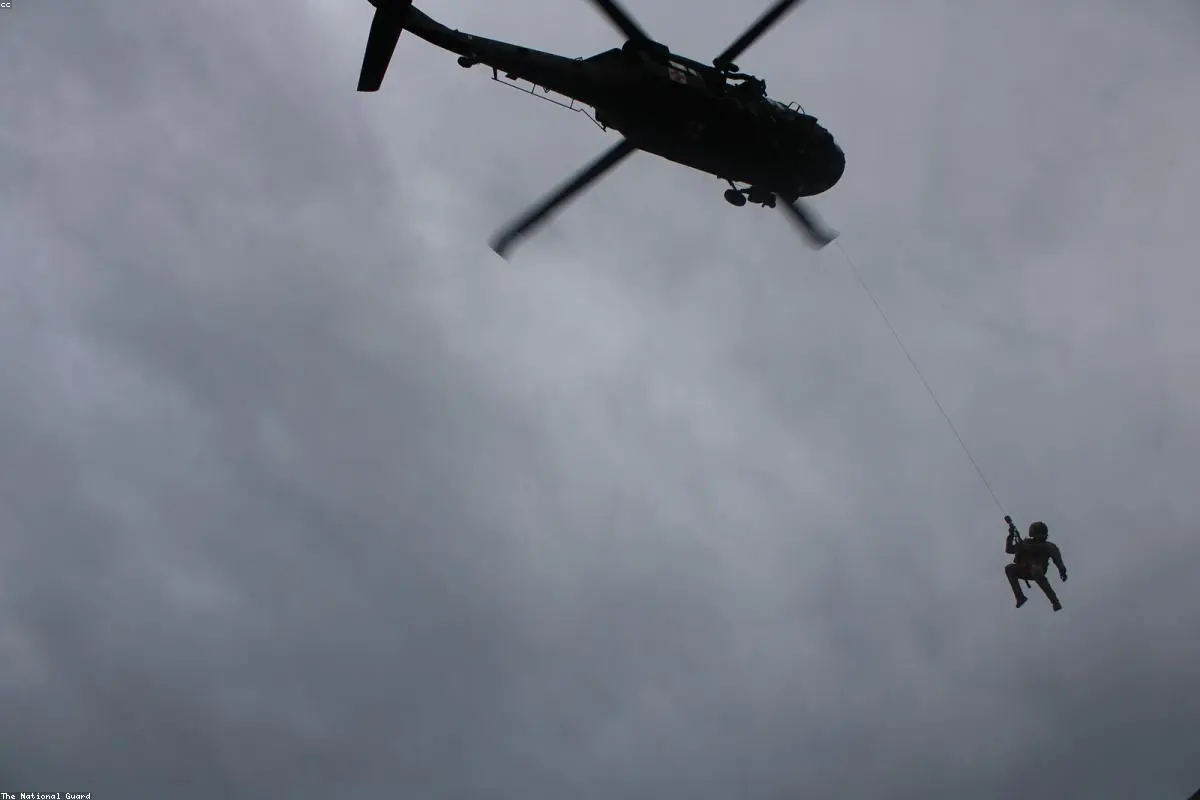
The actual retrieval of Sitton was a masterclass in precision. An H-19 Chickasaw helicopter, piloted by Captain Robert Sullivan, was tasked with the landing. To make the aircraft light enough to hover at such a high altitude, the crew had to strip away unnecessary equipment and carry only the minimum amount of fuel required for the trip. It was a calculated gamble; if they lingered too long, they wouldn’t have enough fuel to return.
When the helicopter finally touched down, the rotors kicking up a blinding cloud of powdered snow, Sitton was found remarkably alive, though suffering from the early stages of frostbite and exhaustion. The journey back was a tense affair, as the overloaded helicopter struggled to gain altitude and clear the surrounding peaks. It was only when they reached the lower valleys that the crew could finally breathe a sigh of relief.
Reflecting on a Different Era
Looking back at this incident provides a fascinating window into a period of history where the human element was the primary driver of success. In an age where we are accustomed to instant communication and rapid response, Sitton’s survival underscores the fragility of life on the frontier of global politics. The Zagros Mountains, which today are often discussed in the context of regional defense and strategic borders, were then a theater of individual survival and brotherhood.
This mission didn't just save one man; it helped refine the techniques used by modern Combat Search and Rescue (CSAR) units. The lessons learned in the Iranian wilderness—regarding fuel management, altitude limits, and the psychological resilience of downed pilots—have been passed down through generations of airmen. While the geopolitical landscape between the US and Iran has shifted dramatically over the decades, the story of Sitton’s rescue remains a testament to the universal drive to leave no one behind, regardless of how remote or hostile the terrain may be.
Ultimately, the unfolding of this rescue serves as a bridge between the past and the present, reminding us that behind every headline about international relations and military strategy, there are human stories of courage that deserve to be remembered.