A Hometown Vision for the Commonwealth Games
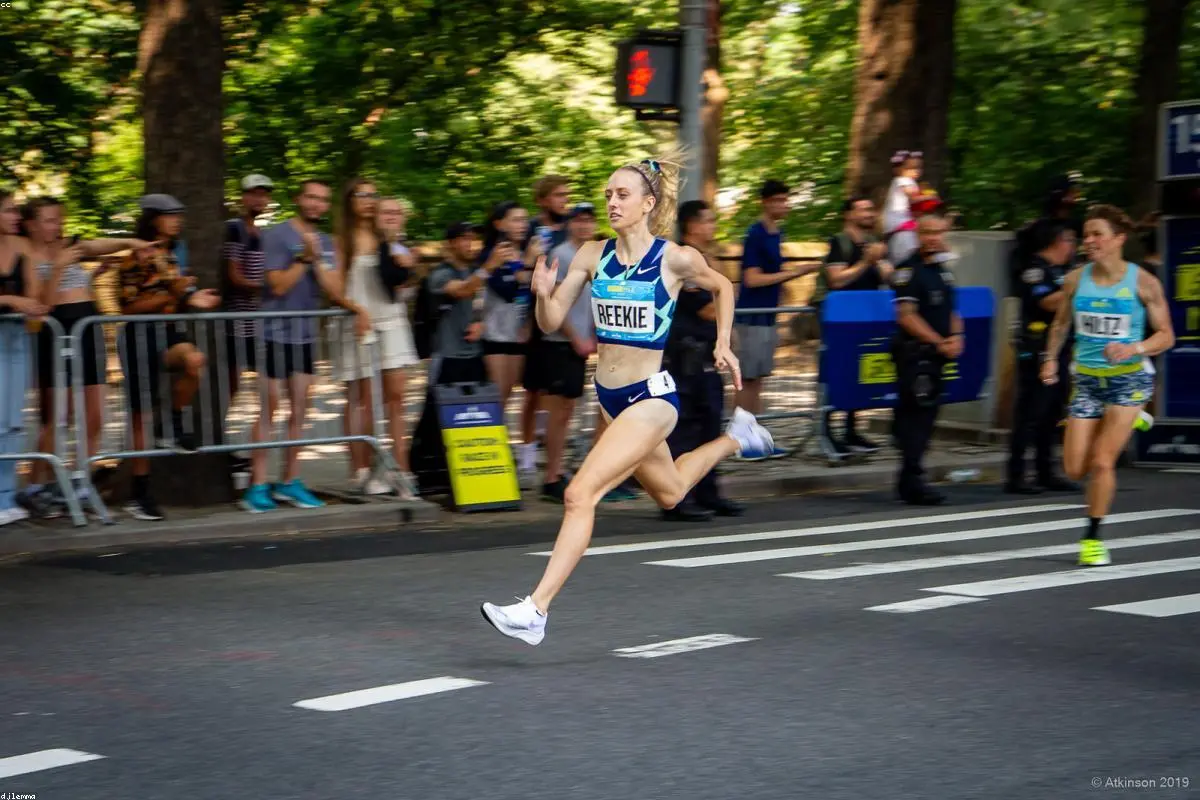
For any athlete, the prospect of a major championship on home soil is the stuff of dreams. For Jemma Reekie, the announcement that Glasgow will host the 2026 Commonwealth Games wasn't just news—it was a call to action. The Scottish middle-distance star has made it clear that she doesn't just want to participate; she wants to dominate. Speaking recently about her aspirations for the games, Reekie expressed a firm desire to take on the grueling challenge of both the 800m and the mile, a feat that would solidify her status as one of Scotland’s greatest-ever track athletes.
The 26-year-old, who has consistently hovered on the edge of the global podium, sees the 2026 games as a pivotal moment in her career. After the disappointment of narrowly missing out on medals at the Tokyo and Paris Olympics, the familiar roar of a Glasgow crowd might be exactly the catalyst she needs. The decision to target two events is a bold one, particularly given the high-octane nature of middle-distance running, but Reekie’s current form suggests she is more than capable of handling the workload.
Stay updated with the latest developments in the world of track and field by visiting our Sports section for more in-depth coverage and athlete profiles.
The Strategic Shift: Why the 800m and the Mile?
In a report initially shared by BBC Sport, Reekie noted that she "would love" to double up. Traditionally, middle-distance runners might choose between the 800m and the 1500m. However, the 2026 Commonwealth Games will feature a mile race instead of the standard 1500m, a slight increase in distance that adds a layer of prestige and tactical intrigue. For Reekie, the mile represents a unique bridge between her raw speed in the 800m and her endurance capabilities.
The 800m: Her Bread and Butter
The 800m remains Reekie’s primary focus. Having established herself as a consistent sub-1:58 runner, she is part of an elite group of women who have pushed the event to new heights in recent years. However, the competition is fierce. With the likes of Keely Hodgkinson and Mary Moraa frequently setting the pace on the global stage, Reekie knows that winning gold in Glasgow will require a tactical masterclass. The advantage of a home track, however, cannot be overstated. Knowing every turn of the track and feeling the energy of a local audience can provide that extra percent of effort when the lactic acid builds in the final 100 meters.
The Mile: A Test of Versatility
Transitioning to the mile requires a different set of gears. While the 800m is often described as a prolonged sprint, the mile is a chess match at high speed. Reekie’s experience in the 1500m serves as a solid foundation, but the mile is a more rhythmic, classic distance that demands both patience and a devastating kick. By targeting both, she is signaling a high level of confidence in her aerobic base and her recovery capacity between heats and finals.
Beyond the Podium: The Significance of Glasgow 2026
The 2026 Commonwealth Games will be a somewhat different affair than previous iterations. Following the withdrawal of Victoria, Australia, as the host, Glasgow stepped in to deliver a more streamlined, "compact" version of the event. While the scale may be smaller, the intensity for local athletes has only intensified. For Reekie, who trains and lives within reach of the venues, this is personal.
"It's where I grew up, it's where I train," Reekie has often remarked when discussing her connection to the city. This sense of belonging often translates into a psychological edge. Athletes who feel a deep connection to the host city often find a level of composure that can be elusive in the high-pressure environment of international competition.
Learning from the Near Misses
The road to 2026 is paved with the lessons of the past. Reekie’s fourth-place finish in Tokyo and her fifth-place finish in Paris were agonizingly close to the podium. These results have served as fuel rather than a deterrent. Under the guidance of her coaching team, she has refined her racing strategy, focusing on positioning and timing her finishing burst. The 2026 games represent an opportunity to turn those "what ifs" into a tangible piece of silverware.
Moreover, the absence of some of the world's non-Commonwealth heavyweights—such as the formidable American and Ethiopian middle-distance contingents—changes the tactical landscape. While the field remains world-class, the dynamics of a Commonwealth final are often more aggressive and less predictable, which could play into Reekie’s hands if she maintains her current trajectory of physical growth.
The Path Ahead
Between now and 2026, Reekie’s schedule will be meticulously planned to ensure she peaks at the right moment. The indoor season, the Diamond League circuit, and various World Championships will all serve as stepping stones. But the ultimate goal is clear: standing on top of the podium in Glasgow, perhaps twice.
Her ambition reflects a broader resurgence in Scottish athletics. With stars like Josh Kerr and Laura Muir already household names, Reekie is part of a golden generation that has put Scotland on the map in middle-distance running. If she succeeds in her quest for the double, she won't just be winning for herself—she'll be cementing a legacy for a city that lives and breathes sport.