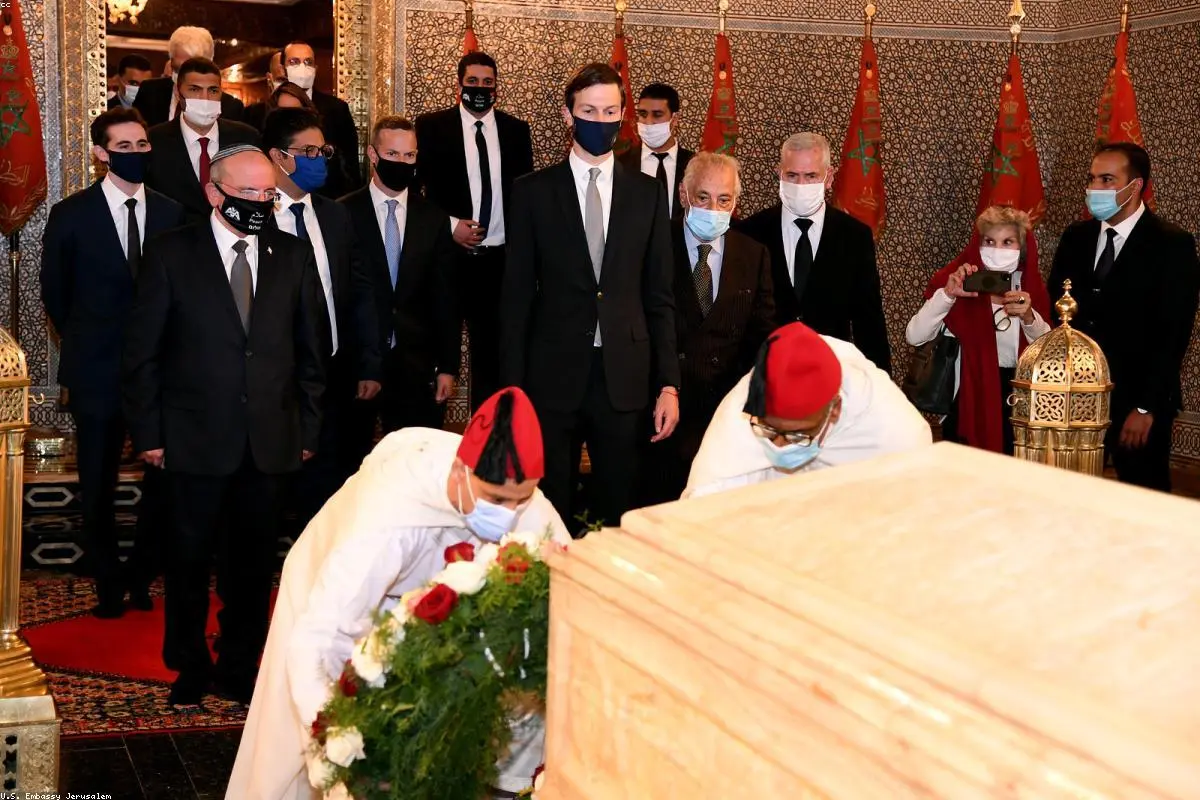
French Minister Moves to Block Kushner from Government Access, Signalling Deeper Diplomatic Strains
In a bold and somewhat unprecedented move, a French minister has reportedly acted to prevent Jared Kushner, a former senior advisor in the Trump administration and currently a US envoy, from accessing governmental facilities and sensitive discussions in Paris. The decision, which has sent ripples through diplomatic corridors, highlights deepening concerns within European capitals regarding influence, transparency, and the delicate protocols of international engagement.
While the specific identity of the French minister initiating the block has not been officially confirmed, reports suggest a high-ranking official within the foreign policy establishment is behind the push. Their primary concern, according to sources familiar with the matter, revolves around the blurred lines between private business interests and public diplomatic roles that have historically surrounded Kushner's various undertakings. This isn't merely a personal slight; it appears to be a calculated statement about the standards expected in international diplomacy, particularly when dealing with non-traditional envoys.
The Heart of the French Concern: Influence and Propriety
The core of the French objection stems from a perception that Kushner's past and present activities, including extensive business dealings and his perceived proximity to controversial political figures, could compromise the integrity of high-level government interactions. During his time in the White House, Kushner often took on a vast portfolio, ranging from Middle East peace efforts to trade negotiations, roles typically reserved for seasoned diplomats. Critics frequently pointed to his lack of traditional diplomatic experience and the potential for conflicts of interest arising from his family's extensive real estate and business empire.
For Paris, allowing unrestricted access to someone whose primary role is not clearly defined within a conventional diplomatic framework could set a problematic precedent. It raises questions about who truly represents sovereign interests and under what conditions sensitive information is shared. This isn't just about security; it's about upholding the unwritten rules and long-established norms of global governance that underpin stable bilateral ties.
Kushner's Evolving Role and Transatlantic Scrutiny
Jared Kushner, son-in-law to former President Donald Trump, gained significant prominence during Trump's presidency. Post-White House, he established Affinity Partners, a private equity firm that notably secured a substantial investment from Saudi Arabia's Public Investment Fund. This move, among others, has drawn scrutiny regarding the potential for leverage and influence, particularly given his past diplomatic engagements in the Middle East.
His continued presence as a US envoy, even in an informal or specific capacity, combined with his private sector ventures, creates a unique challenge for foreign governments. How does one distinguish between a government representative and a private businessman when the individual embodies both? This dilemma is particularly acute for European nations, which often place a strong emphasis on formal diplomatic channels and strict ethical guidelines for public officials.
Broader Implications for US-European Relations
This French initiative, initially reported by sources including the BBC, is more than just an isolated incident; it reflects a broader underlying tension in transatlantic relations. While official Washington and Paris often navigate complex issues with a veneer of cooperation, there have been periods of strain, particularly during the Trump administration. Disagreements over trade, climate policy, and the Iran nuclear deal often highlighted a divergence in strategic interests and values.
A move to block a US envoy, even one with a controversial profile, sends a clear signal. It suggests a desire on France's part to assert its diplomatic autonomy and perhaps to challenge what it perceives as an erosion of traditional diplomatic decorum. Other European capitals, while perhaps more discreet in their public statements, are likely observing this development closely, pondering its implications for their own engagement with individuals who operate outside conventional diplomatic structures.
The situation underscores the ongoing recalibration of relationships between allies in an increasingly complex world. As global powers grapple with new forms of influence and the blurred lines between political power and private wealth, such diplomatic friction points are likely to become more common. How the United States, and specifically the individuals involved, respond to this French challenge will be a crucial test of the resilience of bilateral ties and the future of diplomatic protocol in an era defined by unconventional actors.
Ultimately, this isn't just about one individual; it's about the principles of governance and the integrity of international affairs. France's actions, whether seen as a bold defense of diplomatic norms or an overreach, certainly add a fascinating wrinkle to the intricate tapestry of modern foreign policy.