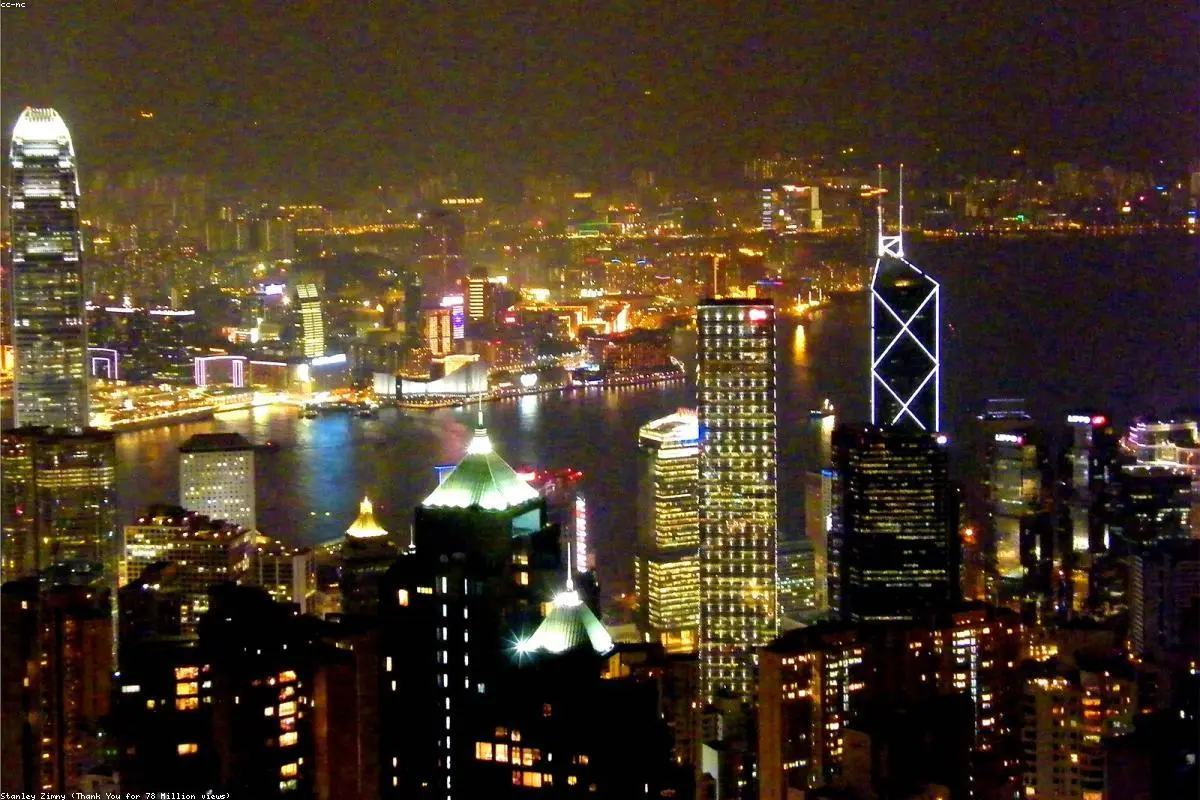
The Changing Face of Victoria Harbour
For decades, the towering glass monoliths of Hong Kong’s Central district were synonymous with global investment banks and legacy law firms. However, a walk through the city’s commercial hubs today tells a different story. The logos on the building facades are changing, replaced by the names of mainland China’s most ambitious tech pioneers. From artificial intelligence startups to e-commerce juggernauts, a new wave of Chinese enterprises is racing to establish a foothold in the city.
This isn't just a matter of proximity; it’s a calculated strategic pivot. As geopolitical frictions complicate the relationship between Beijing and the West, Hong Kong has emerged as the ultimate 'middle ground.' It offers a unique blend of mainland alignment and international connectivity that is becoming increasingly rare in today’s fragmented economy. For many of these firms, the move is less about escaping the mainland and more about finding a sophisticated springboard into the global market.
The Geopolitical Buffer
One of the primary drivers behind this migration is the need for a 'buffer zone.' In an era of increasing trade restrictions and tech-sector sanctions, operating directly out of mainland China can sometimes limit a company’s reach in Western markets. Hong Kong, while undeniably part of China, maintains a separate legal and judicial system based on common law. This distinction provides a level of comfort to international investors and partners who may be wary of the regulatory complexities of the mainland.
By setting up shop in Hong Kong, Chinese firms can present a more globalized face to the world. It allows them to navigate international compliance standards more easily while still remaining under the protective umbrella of the national economy. According to a recent BBC report, this trend is accelerating as firms look to insulate themselves from the volatility of international relations.
A Financial Safe Haven
Beyond politics, the move is deeply rooted in the search for capital. Hong Kong remains one of the world’s premier financial hubs, offering deep pools of liquidity and a highly efficient stock exchange. For many tech companies, the goal is an Initial Public Offering (IPO). While listing in New York has become more fraught with regulatory hurdles, and mainland exchanges have their own specific criteria, Hong Kong offers a 'best of both worlds' scenario.
The city’s financial ecosystem is specifically geared toward high-growth industries. We see this reflected across our broader coverage of the Business news sector, where the integration of the Greater Bay Area is creating a seamless flow of capital between the manufacturing prowess of Shenzhen and the financial expertise of Hong Kong. This synergy makes it significantly easier for startups to secure venture capital and eventually transition into the public markets.
Key Advantages Driving the Move:
- Convertible Currency: The Hong Kong dollar’s peg to the US dollar allows for easier international transactions and profit repatriation.
- Tax Incentives: With one of the lowest and simplest tax regimes in the world, the city is a magnet for profit-focused tech enterprises.
- Data Governance: Hong Kong offers a familiar framework for international data handling, which is crucial for AI and cloud-based services.
The Talent Magnet and the Greater Bay Area
Infrastructure and finance are vital, but tech companies live and die by their talent. Hong Kong is uniquely positioned to attract a diverse workforce. It draws in elite graduates from its own world-class universities while acting as a beacon for mainland professionals who want an international lifestyle without moving halfway across the globe. Furthermore, the development of the Greater Bay Area (GBA) has turned the region into a mega-hub, allowing engineers in Shenzhen to collaborate in real-time with executives in Hong Kong.
This connectivity is changing the traditional 'office' model. We are seeing firms use Hong Kong as their global headquarters for legal, financial, and marketing functions, while keeping their heavy-duty R&D and manufacturing operations just across the border. This 'front shop, back factory' approach has been modernized for the digital age, creating a high-efficiency loop that is difficult to replicate elsewhere in Asia.
Looking Ahead: A New Identity for the City
The influx of Chinese tech firms is undoubtedly reshaping Hong Kong’s identity. While some critics worry about the city losing its 'international' flavor, others argue that it is simply evolving to meet the demands of the 21st century. The city is no longer just a window through which the world looks at China; it is the bridge that China is using to step out into the world.
For the tech sector, this race to set up in Hong Kong is more than a trend—it's a survival strategy. In an increasingly polarized world, the city’s role as a neutral, sophisticated, and capital-rich base is more valuable than ever. As long as Hong Kong can maintain its unique legal status and financial openness, it will likely remain the preferred destination for any Chinese company with global ambitions.