A New Chapter in the Lunar Legacy
It has been more than half a century since the world watched, breathless, as the Apollo missions redefined the boundaries of human achievement. Since Gene Cernan left the last footprint on the lunar surface in 1972, the Moon has remained a silent, untouched neighbor. That is about to change. With the Artemis II mission, NASA and its global partners are shifting from the theoretical to the tangible, preparing a crew of four to venture further into the cosmos than any human has traveled in decades.
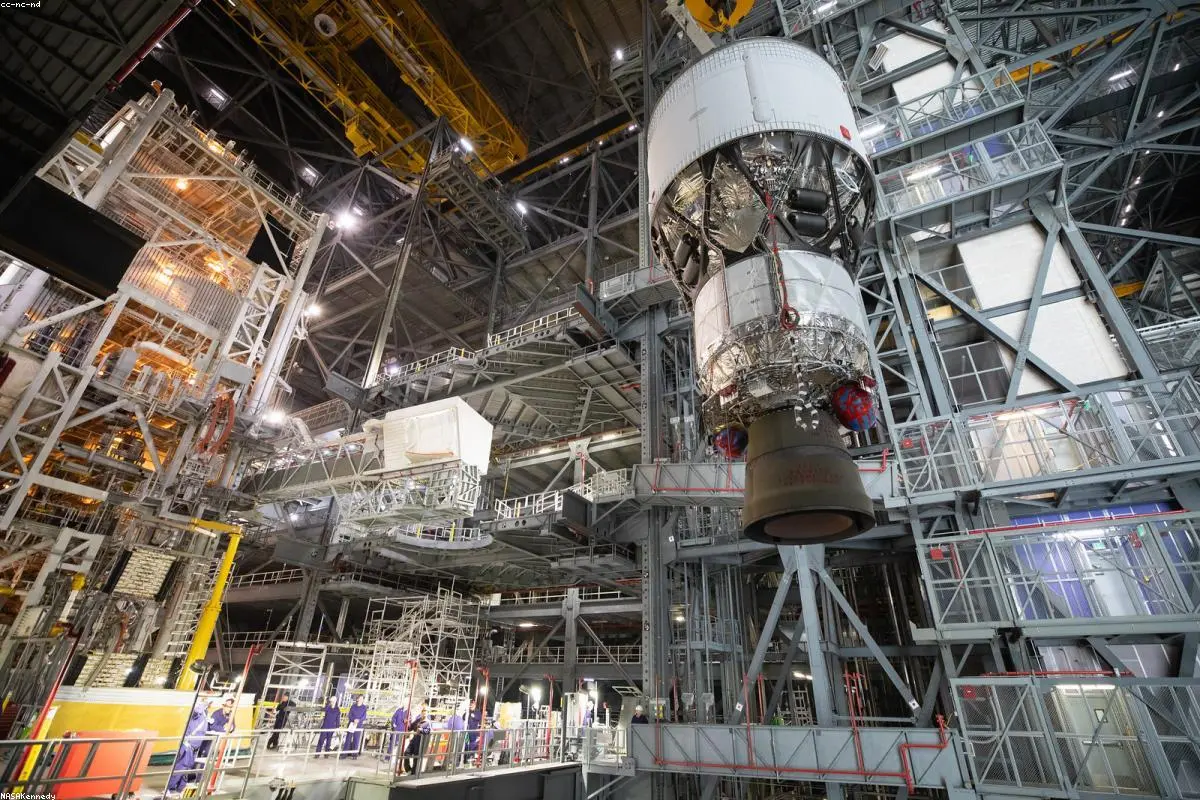
Unlike the Apollo missions, which were born out of a localized Cold War rivalry, the Artemis program is built on a foundation of international cooperation and a desire for sustainable presence. This isn't just a quick trip to plant a flag; it is a rigorous test of the Orion spacecraft and the Space Launch System (SLS). As reported by the BBC, this 10-day flight will take the crew around the far side of the Moon, slingshotting them back to Earth to prove that we are truly ready to return to the lunar surface—and eventually, push onward to Mars.
The Commander: Reid Wiseman
Leading the crew is Reid Wiseman, a veteran of the International Space Station with a reputation for calm under pressure and a deep technical understanding of orbital mechanics. Wiseman, who served as the Chief of the Astronaut Office before being assigned to this mission, represents the steady hand needed for a maiden crewed voyage of a new spacecraft.
Wiseman’s role is more than just steering the ship; he is the bridge between the engineers on the ground and the reality of the cockpit. His experience living in microgravity for 165 days gives him a unique perspective on the physiological and psychological demands of deep space. For Wiseman, Artemis II isn't just about the Moon; it's about refining the systems that will one day sustain human life on other planets.
The Pilot: Victor Glover
Sitting in the pilot’s seat is Victor Glover, a Captain in the U.S. Navy and an experienced aviator who previously served as the pilot for the SpaceX Crew-1 mission. When Artemis II launches, Glover will become the first person of color to leave Earth’s orbit for a lunar mission, a milestone that underscores NASA’s commitment to ensuring that the next generation of space exploration reflects all of humanity.
Glover is known for his infectious enthusiasm and his ability to communicate the wonder of space to the public. However, his primary focus remains the technical performance of the Orion capsule. As the pilot, he will be responsible for manual maneuvers and ensuring that the spacecraft’s life support and navigation systems operate flawlessly during the high-stakes journey around the lunar backside.
The Mission Specialist: Christina Koch
No stranger to breaking records, Christina Koch holds the title for the longest single spaceflight by a woman, having spent 328 days aboard the ISS. On Artemis II, she serves as a mission specialist, bringing an unparalleled level of scientific expertise to the crew. Koch’s background in electrical engineering and her experience working in remote locations—from the South Pole to the Arctic—makes her the ideal candidate for a mission where self-reliance is key.
Koch will be the first woman to venture to the Moon, but she often emphasizes that the focus should be on the science and the collective effort. Her presence on the mission is a testament to how far the field has come since the 1960s, transitioning from a narrow demographic of test pilots to a diverse group of scientists and engineers capable of conducting complex research in the most extreme environments imaginable.
The International Partner: Jeremy Hansen
In a move that highlights the international nature of modern space travel, the fourth seat belongs to Jeremy Hansen of the Canadian Space Agency (CSA). A former fighter pilot, Hansen has spent years training in Houston, waiting for the right mission. His inclusion is the result of a treaty between the U.S. and Canada, marking the first time a non-American will travel beyond low-Earth orbit.
Hansen’s presence is a reminder that the Moon belongs to no single nation. The collaboration between NASA and the CSA—along with contributions from the European and Japanese space agencies—is what makes the Artemis program resilient. By sharing the costs, the risks, and the rewards, the global community is ensuring that this return to the Moon is a permanent one. Hansen often speaks of the "Canadian spirit" of exploration, one that values cooperation and long-term vision over short-term glory.
What Happens Next?
The Artemis II mission is currently slated for launch in late 2025 or 2026, depending on the final testing of the heat shield and other critical components. The crew is currently undergoing intensive training, simulating every possible contingency they might face 230,000 miles from home. They are practicing manual docking, emergency egress, and the delicate art of re-entering the Earth's atmosphere at speeds exceeding 25,000 miles per hour.
While Artemis II won't see these four individuals walk on the lunar dust, they are the ones laying the tracks. Their success will clear the way for Artemis III, which aims to land the first humans on the lunar South Pole. As we look to the stars, it is clear that Wiseman, Glover, Koch, and Hansen are not just astronauts; they are the standard-bearers for a new era of human curiosity.


