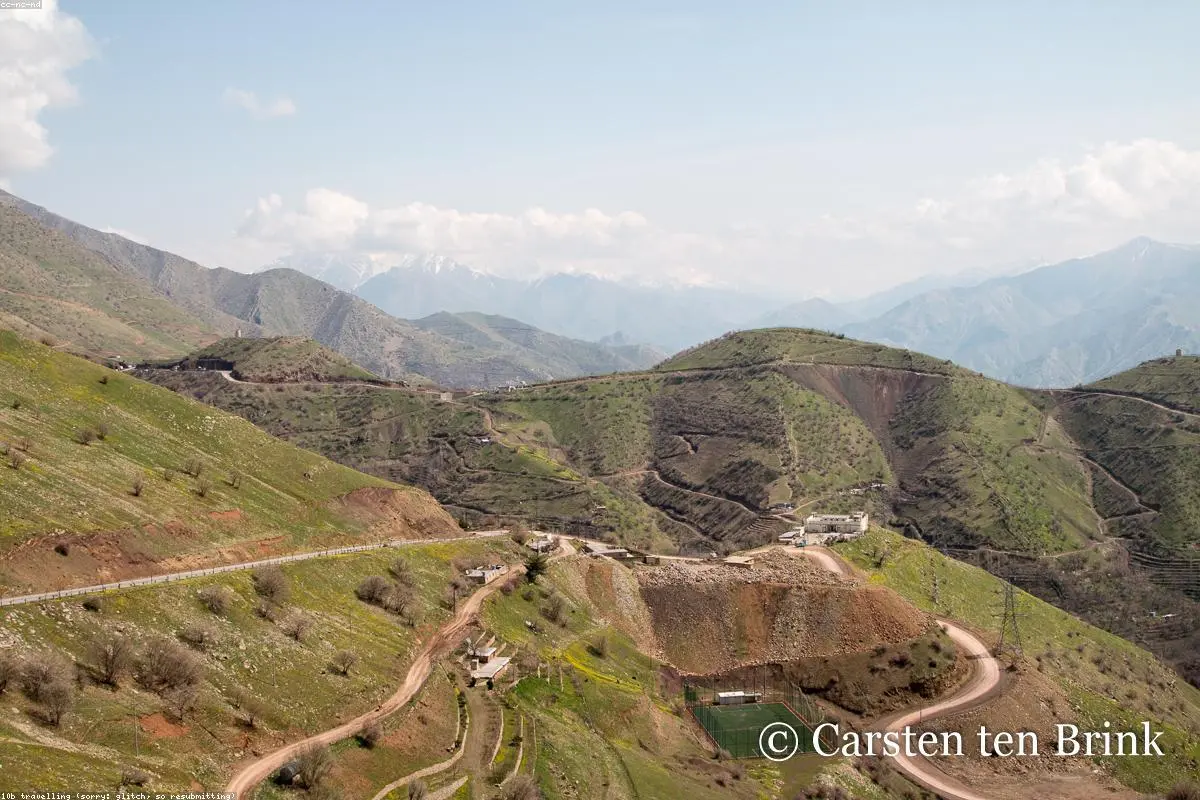
The Shadow Over the Zagros
In the high, jagged peaks of the Zagros Mountains that straddle the border between Iraq and Iran, the silence is rarely peaceful. These days, it is often broken by a mechanical hum—the distinctive, lawnmower-like buzz of an Iranian suicide drone. For the thousands of Iranian Kurds living in exile here, the sound is a grim reminder that while they may have crossed the border, they haven't escaped the reach of the Islamic Republic.
These camps, scattered across the autonomous Kurdistan Region of Iraq (KRI), house political parties and peshmerga fighters who have spent decades in opposition to Tehran. However, the pressure has reached a fever pitch in recent months. Following the widespread 'Woman, Life, Freedom' protests that rocked Iran, the regime has increasingly looked outward to find a scapegoat, raining down missiles and drones on these exiled communities under the guise of national security.
A Life Defined by the 'Waiting Game'
Walking through the camps, you don't just see soldiers; you see a society in waiting. There are schools, small markets, and families who have known no other home. Yet, the atmosphere is heavy with the weight of an unresolved conflict. The residents here are members of groups like the KDPI (Kurdish Democratic Party of Iran) and Komala, organizations that Tehran views as 'terrorists' but which the locals see as the last line of defense for Kurdish identity.
The tactical reality has shifted significantly. No longer is the threat just a ground skirmish at a border outpost. Today, the danger arrives from the sky. The Iranian Revolutionary Guard Corps (IRGC) has deployed sophisticated loitering munitions to target specific buildings, often nestled among civilian residences. This shift toward aerial bombardment has forced many to relocate to even more remote areas, yet the defiance remains palpable. As detailed in recent reporting by the BBC, the resilience of these groups is being tested by a regime determined to silence them for good.
The Geopolitical Squeeze
The situation is further complicated by the precarious position of the Iraqi government and the Kurdistan Regional Government (KRG). Caught in the middle of an International tug-of-war, Baghdad is under immense pressure from Tehran to disarm these groups and move them away from the border. A security pact signed between Iraq and Iran last year has already led to the evacuation of several strategic mountain bases.
For the exiles, this feels like a betrayal by their ethnic kin in Iraq, who are themselves trying to balance survival against a powerful and often aggressive neighbor. The Kurdish leadership in Erbil is walking a razor-thin tightrope: they must maintain their autonomy from Baghdad, manage their relationship with the West, and avoid provoking a full-scale Iranian invasion—all while trying to protect the dissidents they have hosted for forty years.
The Ideological Battleground
Why is Tehran so focused on these mountain camps? The answer lies in the symbolic power the exiles hold. During the 2022 protests sparked by the death of Mahsa Amini—a young Kurdish woman—the Iranian regime accused these groups of smuggling weapons and instigating the unrest. While the groups deny providing hardware to protesters, they proudly admit to providing the 'spark' of ideological resistance.
"They are afraid of us because we represent an alternative," says one veteran peshmerga fighter, his eyes scanning the horizon for the tell-tale silhouette of a drone. "They can destroy our buildings with drones, but they cannot kill the idea of a free Kurdistan or a democratic Iran. We are waiting for the moment the regime falters from within. When that happens, we will be ready to return.”
Between Resilience and Uncertainty
As winter approaches and the political climate grows even colder, the future of the exiled Kurds remains uncertain. The international community, largely distracted by conflicts in Gaza and Ukraine, has offered little more than perfunctory condemnations of the drone strikes. This lack of a robust global response has emboldened Tehran to continue its cross-border operations with relative impunity.
Despite the constant threat, the spirit within the camps isn't one of defeat, but of calculated patience. They are maintaining their structures, training their youth, and keeping their satellite broadcasts beaming into Iran. They are a community living on the edge of a map, waiting for a geopolitical shift that might finally allow them to stop looking at the sky in fear and start looking toward the road home.
Ultimately, the story of these exiled Kurds is a microcosm of the broader struggle for the Middle East's future. It is a story of how modern technology—in the form of lethal drones—is used to enforce old-world authoritarianism, and how the human spirit, rooted in the harsh soil of the Zagros, continues to resist it against all odds.


