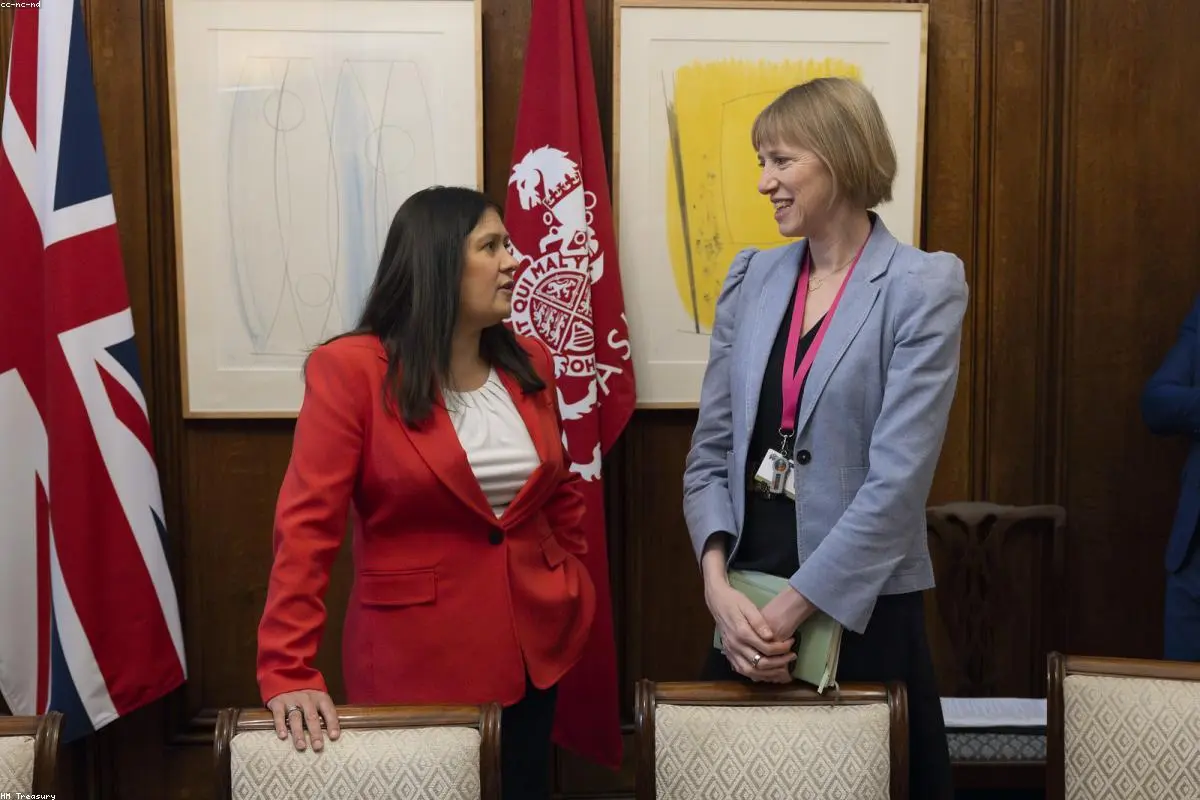
A Brief Sigh of Relief for Rachel Reeves
In the world of national economics, a 'win' is often relative. For the UK’s new Chancellor, Rachel Reeves, the latest figures from the Office for National Statistics (ONS) provided a rare bit of breathing room. Government borrowing in June reached £14.5 billion—a significant sum by any standard, yet notably lower than the £17.6 billion that many independent forecasters had predicted.
While any dip in borrowing is welcomed by the Treasury, it would be a mistake to view this as a sudden shift into the black. The figure is still the fifth-highest for the month of June since records began back in 1993. This slight outperformance of expectations suggests that tax receipts remained resilient, but it does little to alter the broader, more concerning narrative regarding the UK’s fiscal health.
This data serves as one of the first major economic indicators to land on the Chancellor's desk since Labour’s landslide victory. It highlights the tightrope the new government must walk: balancing the need for public investment with a debt pile that refuses to shrink. To stay updated on how these figures impact the broader market, you can explore more in our Business section.
The Weight of the National Debt
To understand why a £3 billion 'saving' hasn't triggered celebrations in Whitehall, one must look at the total accumulation of debt. The UK's public sector net debt is currently sitting at roughly 99.5% of Gross Domestic Product (GDP). This is a level not seen since the early 1960s, a time when the country was still navigating the financial aftermath of the Second World War.
The cost of servicing this debt remains a persistent thorn in the side of the UK's financial planning. High interest rates, maintained by the Bank of England to combat inflation, mean that a massive chunk of taxpayer money is funneled directly into interest payments rather than being spent on schools, hospitals, or infrastructure. Even when borrowing comes in lower than expected, the sheer scale of existing obligations limits the government's ability to pivot toward growth-focused spending.
The 'Fiscal Inheritance' Debate
The political rhetoric surrounding these numbers is as sharp as the data itself. The new administration has been quick to point out the 'dire inheritance' left by their predecessors. According to reports from the BBC, Rachel Reeves is expected to present a 'true' picture of the public finances to Parliament in the coming weeks, likely setting the stage for a difficult Autumn Budget.
The challenge for the current government is twofold. First, they must satisfy the OBR (Office for Budget Responsibility) that they are committed to fiscal responsibility to keep the markets calm. Second, they face immense pressure from public sector unions and a struggling NHS to increase spending. It is a classic 'pincers' movement: stagnant productivity on one side and rising demand for services on the other.
A Look at the Moving Parts
Several factors contributed to the June figures being slightly better than the gloomy forecasts. Tax receipts, particularly from self-assessment and corporation tax, have held up better than expected. This suggests that while the economy isn't exactly booming, it possesses a certain level of underlying grit. However, these gains are often offset by other rising costs.
- Public Sector Pay: Decisions regarding pay rises for teachers and doctors are looming, which could easily swallow any 'savings' from lower-than-expected borrowing.
- Social Security: Inflation-linked benefits continue to put pressure on the departmental budgets.
- Energy Subsidies: While the massive energy price spikes of previous years have subsided, the long-term transition to green energy requires significant upfront capital.
The reality is that the UK is stuck in a low-growth trap. When the economy grows slowly, tax revenues follow suit, making it nearly impossible to pay down debt without either cutting services or raising taxes—both of which are politically perilous. The Chancellor has already ruled out several major tax hikes, leaving many wondering where the 'black hole' in the finances will be filled.
What Happens Next?
As we move toward the final quarter of the year, all eyes will be on the Bank of England. If inflation remains stable, a potential cut in interest rates later this year could lower the cost of government borrowing significantly. This would provide the most meaningful relief for the Treasury, perhaps even more so than any single month of better-than-expected tax receipts.
In the meantime, the government is likely to focus on its 'growth mission.' By streamlining planning laws and encouraging private investment, the hope is that the UK can grow its way out of its debt problems. It is a long-term strategy, and as the June borrowing figures show, the starting line is a particularly difficult place to be. The numbers may be slightly better today, but the mountain ahead remains just as steep.